US shoots down Iranian drone near aircraft carrier
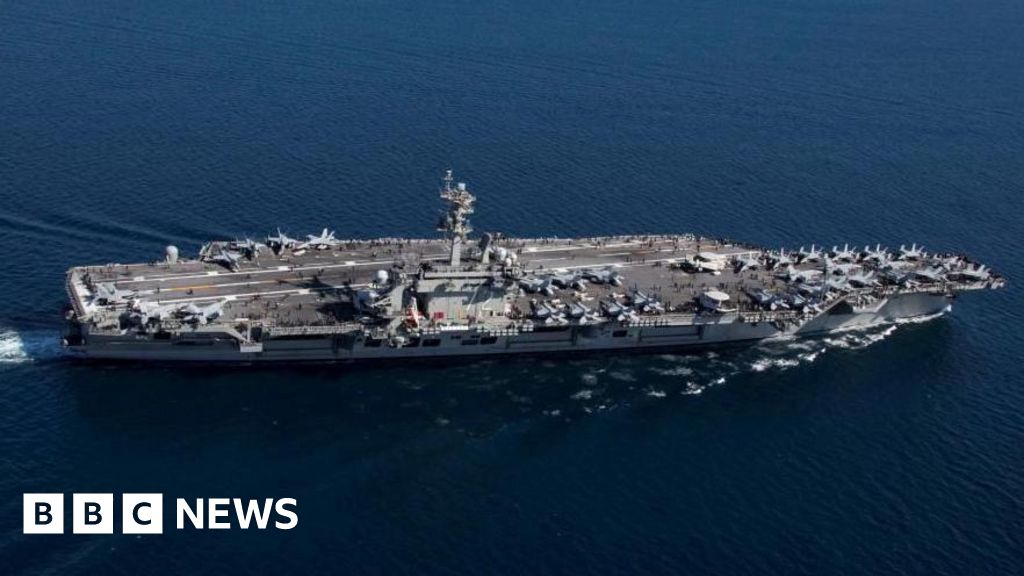
US says it shot down Iranian drone flying towards aircraft carrierImage Credit: BBC News
Key Points
- •WASHINGTON – Global financial markets were rattled Thursday after the Pentagon confirmed a U.S. Navy ship destroyed an Iranian drone in the Strait of Hormuz, a critical artery for world oil supplies. The incident marks a direct military confrontation that dramatically escalates tensions between Washington and Tehran, threatening to disrupt the fragile stability of the global energy economy.
- •Iran's Denial: In a swift rebuttal, Iranian officials denied losing a drone in the Strait of Hormuz. Deputy Foreign Minister Abbas Araghchi tweeted, "We have not lost any drone in the Strait of Hormuz nor anywhere else. I am worried that USS Boxer has shot down their own UAS by mistake!" This starkly conflicting narrative only adds to the uncertainty surrounding the event.
- •The Global Oil Artery: The Strait of Hormuz is the only sea passage from the Persian Gulf to the open ocean. Approximately 21 million barrels of oil per day—equivalent to about 21% of global petroleum liquids consumption—pass through it.
- •Rising Insurance Costs: In recent weeks, maritime insurance firms have already hiked "war risk" premiums for tankers transiting the Gulf. These additional costs, which can amount to hundreds of thousands of dollars per voyage, are ultimately passed on to consumers. Thursday's incident is expected to push these rates even higher.
- •The Nuclear Deal's Collapse: The U.S. exit from the 2015 accord, which had lifted sanctions in exchange for curbs on Iran's nuclear program, is the root cause of the current standoff. European signatories have been unable to salvage the deal in the face of U.S. secondary sanctions.
US says it shot down Iranian drone flying towards aircraft carrier
WASHINGTON – Global financial markets were rattled Thursday after the Pentagon confirmed a U.S. Navy ship destroyed an Iranian drone in the Strait of Hormuz, a critical artery for world oil supplies. The incident marks a direct military confrontation that dramatically escalates tensions between Washington and Tehran, threatening to disrupt the fragile stability of the global energy economy.
The downing of the drone represents the first confirmed instance of the U.S. military directly targeting and destroying an Iranian asset in a cycle of provocations that has intensified over the past two months. This action injects a new level of unpredictability into a standoff that has already put oil traders and global shipping companies on high alert.
The Escalation in the Strait
The Pentagon reported that the USS Boxer, an amphibious assault ship, took "defensive action" against an Iranian fixed-wing unmanned aerial system (UAS) at approximately 10 a.m. local time. The drone had approached the U.S. vessel and closed to within a "threatening range" of approximately 1,000 yards.
According to U.S. officials, the Boxer’s crew made multiple calls to stand down, which were ignored, before employing electronic jamming to bring the drone down in the water. The action was described as a necessary measure to ensure the safety of the ship and its crew.
- Iran's Denial: In a swift rebuttal, Iranian officials denied losing a drone in the Strait of Hormuz. Deputy Foreign Minister Abbas Araghchi tweeted, "We have not lost any drone in the Strait of Hormuz nor anywhere else. I am worried that USS Boxer has shot down their own UAS by mistake!" This starkly conflicting narrative only adds to the uncertainty surrounding the event.
Markets on Edge as Tensions Spike
The immediate financial impact was clear, as oil prices surged on the news. Brent crude, the international benchmark, jumped more than 1.5% in afternoon trading, reflecting the market's anxiety over a potential military conflict that could choke off a vital global chokepoint.
The Strait of Hormuz is the world's most important oil transit lane. Any disruption, or even the heightened threat of one, has a direct and immediate effect on energy prices and the cost of international trade.
- The Global Oil Artery: The Strait of Hormuz is the only sea passage from the Persian Gulf to the open ocean. Approximately 21 million barrels of oil per day—equivalent to about 21% of global petroleum liquids consumption—pass through it.
- Rising Insurance Costs: In recent weeks, maritime insurance firms have already hiked "war risk" premiums for tankers transiting the Gulf. These additional costs, which can amount to hundreds of thousands of dollars per voyage, are ultimately passed on to consumers. Thursday's incident is expected to push these rates even higher.
A Pattern of Provocation
This latest confrontation does not exist in a vacuum. It is the culmination of a "maximum pressure" campaign initiated by the Trump administration following its 2018 withdrawal from the Iran nuclear deal (JCPOA). The subsequent reimposition of crippling economic sanctions has aimed to force Tehran back to the negotiating table.
Iran has responded with what analysts call a "maximum resistance" strategy, designed to demonstrate its ability to inflict pain and create instability in response to U.S. pressure.
- The Nuclear Deal's Collapse: The U.S. exit from the 2015 accord, which had lifted sanctions in exchange for curbs on Iran's nuclear program, is the root cause of the current standoff. European signatories have been unable to salvage the deal in the face of U.S. secondary sanctions.
- A Tit-for-Tat Cycle: Prior to this event, recent months saw a series of escalations, including mysterious attacks on four oil tankers off the UAE coast in May, followed by more sophisticated attacks on two tankers in the Gulf of Oman in June. Iran also shot down a high-altitude U.S. surveillance drone, the RQ-4A Global Hawk, which it claimed had violated its airspace.
Diplomacy and Deterrence
Despite the direct military action, White House officials have stressed that diplomatic avenues remain the preferred option, albeit one backed by a credible military threat. A senior official reiterated the administration's stance on Thursday.
She said President Trump "remains committed to always pursuing diplomacy first," but added he "has always a range of options on the table, and that includes the use of military force."
This dual-track approach of deterrence and diplomacy has defined the U.S. position. The defensive action by the USS Boxer is being framed as a clear message of American resolve and its right to self-defense, not as an offensive strike. For its part, Iran continues to signal that it will not negotiate under duress, creating a dangerous diplomatic impasse.
What to Watch
The downing of the Iranian drone pushes the U.S. and Iran closer to a direct conflict than at any point in the current crisis. The coming days will be critical in determining whether this incident serves as a wake-up call for de-escalation or a trigger for further retaliation. For global markets, the focus remains squarely on the security of the Strait of Hormuz.
- Oil Market Volatility: Traders will be watching for any sign of Iranian retaliation or further U.S. military movements. Oil prices are expected to remain highly volatile and sensitive to headlines from the region.
- The Risk of Miscalculation: The primary concern among military and financial analysts is the high risk of an accidental war. With both sides operating in close proximity and with heightened states of alert, a simple misjudgment by a local commander could spiral into a regional conflict with catastrophic economic consequences.
- International Diplomatic Efforts: European and Asian powers, heavily reliant on Middle Eastern oil, will likely intensify efforts to mediate the crisis. The key question is whether any third party can build a bridge between Washington's demand for a new, broader deal and Tehran's refusal to talk while under sanctions.
- Maritime Security Coalitions: The U.S. has been working to build an international coalition to protect commercial shipping in the Gulf. This incident will likely add urgency to that effort, though some allies have been hesitant to join for fear of being drawn into a U.S.-Iran conflict.
Source: BBC News
Related Articles
Nationwide Protests Against ICE Enforcement Erupt in U.S.
Thousands are protesting ICE after the DOJ declined to investigate a fatal agent-involved shooting in Minneapolis, fueling a national movement and public anger.
Venezuela Amnesty Bill Could Free Political Prisoners
Learn about Venezuela's proposed amnesty bill to release political prisoners. The move could signal a major political shift and affect future economic sanctions
Pokémon Cancels Yasukuni Shrine Event After Backlash
The Pokémon Company has canceled an event at Tokyo's controversial Yasukuni Shrine after facing international backlash from China and South Korea.
US to Lose Measles Elimination Status: What It Means
The U.S. is poised to lose its measles elimination status due to escalating outbreaks. Learn what this downgrade means for public health and the economy.