Venezuela Frees Activist Javier Tarazona Amid US Talks
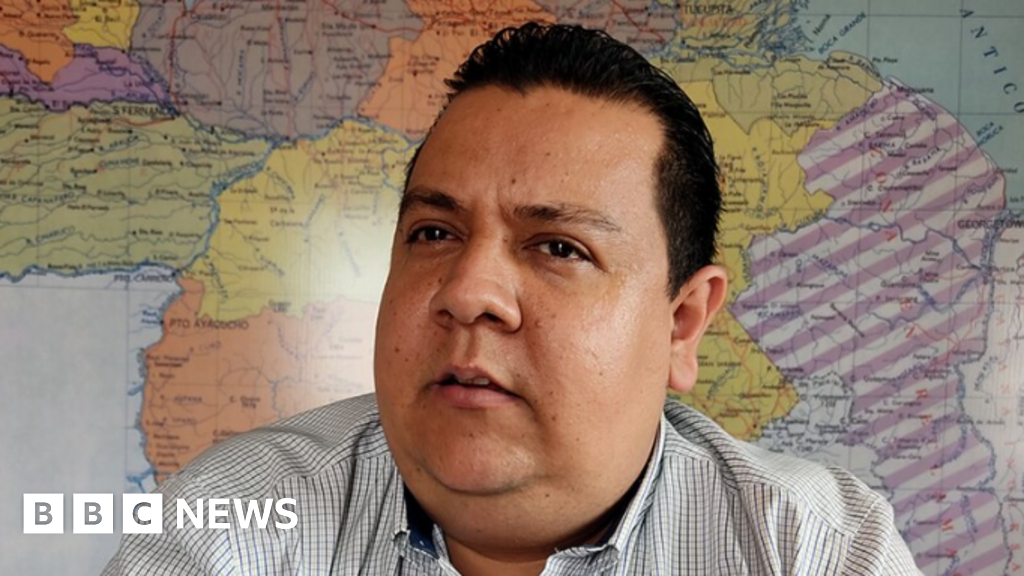
Venezuela releases human rights advocate Javier TarazonaImage Credit: BBC News
Key Points
- •Caracas, Venezuela – In a move resonating from the halls of power in Caracas to the trading floors of Wall Street, the Venezuelan government has granted a conditional release to prominent human rights advocate Javier Tarazona. The decision is being widely interpreted by international observers and financial analysts not as a simple judicial matter, but as a calculated maneuver in the high-stakes diplomatic chess game with the United States, where the ultimate prize is the continued easing of crippling economic sanctions.
- •Government Commitment: The Maduro government pledged to work towards conditions for the 2024 presidential election, including promoting human rights and releasing individuals deemed political prisoners by the opposition and international bodies.
- •U.S. Response: In return for the signing of the accord, the U.S. issued General License 44, allowing Venezuela's state-owned oil company, PDVSA, to resume transactions with international partners, significantly boosting the country's potential for oil revenue.
- •Sticking Points: Progress has been fraught with tension. The Venezuelan Supreme Court's decision to uphold a ban on leading opposition candidate María Corina Machado has been condemned by the U.S. as a violation of the accord's spirit, placing the future of sanctions relief in serious jeopardy.
- •Market Impact: The six-month waiver allowed Venezuela to increase its crude output and exports, with shipments heading to the U.S., Europe, and Asia. Analysts estimate the relief could add hundreds of millions of dollars per month to government coffers.
Venezuela Releases Human Rights Advocate Javier Tarazona
Caracas, Venezuela – In a move resonating from the halls of power in Caracas to the trading floors of Wall Street, the Venezuelan government has granted a conditional release to prominent human rights advocate Javier Tarazona. The decision is being widely interpreted by international observers and financial analysts not as a simple judicial matter, but as a calculated maneuver in the high-stakes diplomatic chess game with the United States, where the ultimate prize is the continued easing of crippling economic sanctions.
Tarazona, the director of the NGO FundaRedes, had been imprisoned for nearly three years on charges including terrorism, incitement of hatred, and treason—accusations his supporters and international rights groups have consistently decried as politically motivated. His release, while conditional, represents one of the most significant concessions by President Nicolás Maduro's government in recent months, coming just ahead of a critical deadline for the renewal of a temporary U.S. sanctions waiver that has provided a vital, albeit fragile, lifeline to Venezuela's oil-dependent economy.
A High-Stakes Calculation
The release is not an isolated event but a direct component of a broader, delicate negotiation. It is seen as a direct response to Washington's demands for democratic progress and respect for human rights as a precondition for continued sanctions relief.
The timing is critical. The U.S. Treasury Department's General License 44, which temporarily lifted restrictions on Venezuela's oil and gas sector, is set to expire in April. The Biden administration has explicitly stated that its renewal is contingent on the Maduro government upholding its commitments under the Barbados Accord, an agreement signed with the opposition last October.
The Barbados Accord: A Fragile Pact
The accord, brokered in Barbados with facilitation from Norway, outlined a roadmap for fairer presidential elections in 2024. Tarazona's release is a tangible, albeit partial, fulfillment of the agreement's human rights component.
-
Government Commitment: The Maduro government pledged to work towards conditions for the 2024 presidential election, including promoting human rights and releasing individuals deemed political prisoners by the opposition and international bodies.
-
U.S. Response: In return for the signing of the accord, the U.S. issued General License 44, allowing Venezuela's state-owned oil company, PDVSA, to resume transactions with international partners, significantly boosting the country's potential for oil revenue.
-
Sticking Points: Progress has been fraught with tension. The Venezuelan Supreme Court's decision to uphold a ban on leading opposition candidate María Corina Machado has been condemned by the U.S. as a violation of the accord's spirit, placing the future of sanctions relief in serious jeopardy.
The Sanctions Lifeline: Oil and Economic Imperatives
For Venezuela, the economic stakes could not be higher. Years of sanctions, mismanagement, and underinvestment have decimated its once-mighty oil industry, plunging the nation into a severe economic crisis.
The temporary sanctions relief provided an immediate, if limited, boost. PDVSA was able to increase crude oil exports, sign new deals with international partners like Chevron, and generate much-needed foreign currency.
-
Market Impact: The six-month waiver allowed Venezuela to increase its crude output and exports, with shipments heading to the U.S., Europe, and Asia. Analysts estimate the relief could add hundreds of millions of dollars per month to government coffers.
-
Investor Sentiment: The partial lifting of sanctions sparked a rally in Venezuelan government and PDVSA bonds, as investors gambled on a potential path towards economic normalization and debt restructuring. The bonds remain highly sensitive to political developments.
-
The April Deadline: The looming expiration of the license has created significant uncertainty. Oil traders, international energy firms, and creditors are watching closely to see if the Biden administration will allow the waiver to lapse, which would effectively shut down the recent uptick in activity and send Venezuela's economy reeling once more.
A Broader Amnesty on the Horizon
Tarazona's release may be a precursor to a wider, more systemic action. Acting President Delcy Rodríguez has announced that an amnesty bill is being prepared for submission to the National Assembly, where the ruling party holds a commanding majority.
According to Rodríguez, the bill's stated aim is to "heal the wounds of political confrontation, violence, and extremism." While details remain scarce, such a law could formalize the release of other political detainees.
For financial markets, this announcement serves a dual purpose:
- It signals to Washington that Caracas is taking further steps to comply with the Barbados Accord.
- It aims to create a perception of political stabilization, a key factor for any long-term investor considering a return to the Venezuelan market.
The Road Ahead: A Test for Diplomacy and Markets
The conditional freedom of Javier Tarazona is a pivotal development, but it is a single step on a long and precarious path. The ultimate direction of Venezuela's economy now hinges on the political decisions made in the coming weeks.
-
Key Question: Will this concession be enough for the Biden administration to extend the sanctions waiver, or will the continued ban on María Corina Machado prove to be an insurmountable obstacle?
-
Market Watch: Financial markets will remain volatile. The price of Venezuelan bonds and the risk premium associated with its oil sector will fluctuate with every diplomatic statement and political maneuver from Caracas and Washington.
-
Next Steps: All eyes are on the U.S. State Department and Treasury for their official response. Their decision in April will not only determine the immediate economic fate of 30 million Venezuelans but will also send a powerful signal about the effectiveness of using sanctions as a tool for diplomatic leverage. For now, a human rights advocate's freedom has become the most closely watched barometer of Venezuela's economic future.
Source: BBC News
Related Articles
Nationwide Protests Against ICE Enforcement Erupt in U.S.
Thousands are protesting ICE after the DOJ declined to investigate a fatal agent-involved shooting in Minneapolis, fueling a national movement and public anger.
Venezuela Amnesty Bill Could Free Political Prisoners
Learn about Venezuela's proposed amnesty bill to release political prisoners. The move could signal a major political shift and affect future economic sanctions
Pokémon Cancels Yasukuni Shrine Event After Backlash
The Pokémon Company has canceled an event at Tokyo's controversial Yasukuni Shrine after facing international backlash from China and South Korea.
US to Lose Measles Elimination Status: What It Means
The U.S. is poised to lose its measles elimination status due to escalating outbreaks. Learn what this downgrade means for public health and the economy.