Wall Street's Fed Problem: A Perfect Storm Brewing in 2026
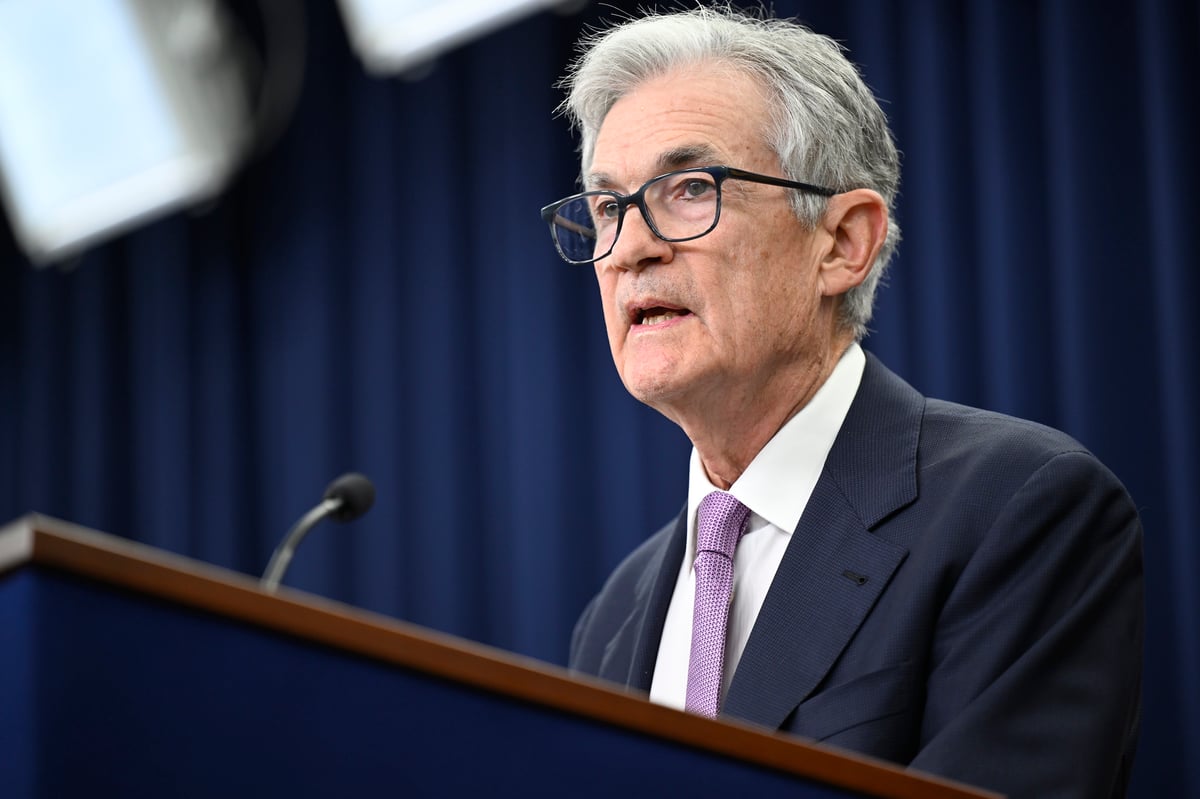
Wall Street Has a Federal Reserve Problem, With a Perfect Storm Brewing in 2026Image Credit: Yahoo Finance
Key Points
- •NEW YORK – While equity markets continue their ascent to record highs, a foundation of uncertainty is forming within the U.S. Federal Reserve, the very institution tasked with ensuring economic stability. A rare and deepening internal division over monetary policy, compounded by an impending leadership transition, is creating a potential perfect storm that could challenge the bull market's resilience as 2026 approaches.
- •A Pattern of Dissent: Each of the last four FOMC meetings has featured at least one member dissenting from the majority decision on interest rates. This break from consensus signals a growing divergence in how policymakers are interpreting economic data.
- •Historically Rare Division: More alarmingly, the two most recent meetings have produced "bidirectional dissents." This means that while the committee settled on a consensus policy action, some members dissented in favor of a more aggressive move (e.g., a larger rate cut), while at least one other dissented in favor of a more hawkish stance (e.g., holding rates steady).
- •Unprecedented Disagreement: According to historical records, bidirectional dissents have occurred in only three FOMC meetings over the past 36 years. Two of those three instances have taken place in the last few months, highlighting the exceptional nature of the current internal debate.
- •The Nomination Process: The nomination of a new Fed Chair by the President introduces a political dimension that can clash with the Fed’s mandate for independence. The subsequent Senate confirmation process can become a contentious, months-long event that creates a prolonged period of uncertainty.
Wall Street Has a Federal Reserve Problem, With a Perfect Storm Brewing in 2026
NEW YORK – While equity markets continue their ascent to record highs, a foundation of uncertainty is forming within the U.S. Federal Reserve, the very institution tasked with ensuring economic stability. A rare and deepening internal division over monetary policy, compounded by an impending leadership transition, is creating a potential perfect storm that could challenge the bull market's resilience as 2026 approaches.
The benchmark S&P 500 has notched one of its strongest multi-year runs in history, and both the Dow Jones Industrial Average and Nasdaq Composite have followed suit. Historically, such momentum is tempered by economic headwinds. Today, however, the most significant risk may not be an external shock, but rather the growing unpredictability of the central bank itself.
The Fed's Fracturing Consensus
The Federal Reserve's primary mandate is to foster maximum employment and maintain price stability. Its main tool for achieving this is the federal funds rate, which influences borrowing costs across the economy. For this policy to be effective and trusted by markets, it relies on a clear, unified message from the Federal Open Market Committee (FOMC).
That unity is now showing significant cracks.
Recent FOMC meetings have been marked by a level of public disagreement not seen in decades, creating conflicting signals that leave investors and corporate leaders struggling to anticipate the Fed's next move.
-
A Pattern of Dissent: Each of the last four FOMC meetings has featured at least one member dissenting from the majority decision on interest rates. This break from consensus signals a growing divergence in how policymakers are interpreting economic data.
-
Historically Rare Division: More alarmingly, the two most recent meetings have produced "bidirectional dissents." This means that while the committee settled on a consensus policy action, some members dissented in favor of a more aggressive move (e.g., a larger rate cut), while at least one other dissented in favor of a more hawkish stance (e.g., holding rates steady).
-
Unprecedented Disagreement: According to historical records, bidirectional dissents have occurred in only three FOMC meetings over the past 36 years. Two of those three instances have taken place in the last few months, highlighting the exceptional nature of the current internal debate.
This division is further illustrated in the Fed's Summary of Economic Projections, or "dot plot," which charts individual members' forecasts for the path of interest rates. Recent plots show a wide dispersion of outlooks, with some officials projecting rate hikes while others anticipate multiple cuts over the same period. Such a lack of cohesion undermines the central bank's credibility and its ability to guide market expectations.
The Leadership Vacuum
Adding a significant layer of political and policy uncertainty is the upcoming conclusion of Fed Chair Jerome Powell's term on May 15, 2026. A change in leadership at the central bank is always a pivotal event for markets, but the current political climate and the existing divisions within the FOMC make this transition particularly fraught.
-
The Nomination Process: The nomination of a new Fed Chair by the President introduces a political dimension that can clash with the Fed’s mandate for independence. The subsequent Senate confirmation process can become a contentious, months-long event that creates a prolonged period of uncertainty.
-
Market Confidence: Wall Street values predictability. A nominee perceived as overly political, or one whose monetary policy views are radically different from the status quo, could trigger significant market volatility. Until a nominee is named and vetted, a cloud of ambiguity will hang over the future of U.S. monetary policy.
-
Compounding Instability: A new chair will inherit a divided FOMC. Forging a new consensus among members with starkly different economic outlooks will be a formidable challenge and could lead to further policy missteps or communication failures in a critical period for the economy.
The Paradox of Rate Cuts
While internal division and leadership changes present clear risks, a third element completes the perfect storm: the market's own interpretation of the Fed's actions. Conventionally, investors view interest rate cuts as bullish for stocks, as they lower the cost of capital and are intended to stimulate economic activity. Historical precedent, however, suggests a more complex and often bearish reality.
-
The Theory vs. Reality: The Federal Reserve does not cut interest rates in a vacuum. It begins an easing cycle in response to deteriorating economic data—such as slowing GDP growth, weakening corporate earnings, or a rise in unemployment. Therefore, the first rate cut in a cycle is often a confirmation that the economy is in trouble.
-
A Recessionary Signal: Historically, the start of a Fed rate-cutting cycle has often preceded, rather than prevented, a recession. The easing cycles that began in 2001 and 2007 were followed by significant economic downturns and bear markets. The cuts were a reaction to weakness that was already taking hold.
-
Investor Implications: As the Fed moves toward an easing posture, investors may initially cheer the move. However, the underlying economic weakness that necessitates the cuts often leads to downward revisions in earnings forecasts and a broader market sell-off, catching overly optimistic investors by surprise.
The Bottom Line
Wall Street is facing a convergence of three powerful forces centered on the Federal Reserve: an internally divided FOMC, a looming leadership transition, and the historically bearish signal that often accompanies the start of a rate-cutting cycle. While the stock market has demonstrated remarkable resilience, this unique combination of risks suggests that the path leading into 2026 will be defined by heightened uncertainty. For investors, the coming period will demand a renewed focus on risk management and a critical eye toward the signals coming from a central bank that appears, for the first time in years, to be at war with itself.
Source: Yahoo Finance
Related Articles
Nationwide Protests Against ICE Enforcement Erupt in U.S.
Thousands are protesting ICE after the DOJ declined to investigate a fatal agent-involved shooting in Minneapolis, fueling a national movement and public anger.
Venezuela Amnesty Bill Could Free Political Prisoners
Learn about Venezuela's proposed amnesty bill to release political prisoners. The move could signal a major political shift and affect future economic sanctions
Pokémon Cancels Yasukuni Shrine Event After Backlash
The Pokémon Company has canceled an event at Tokyo's controversial Yasukuni Shrine after facing international backlash from China and South Korea.
US to Lose Measles Elimination Status: What It Means
The U.S. is poised to lose its measles elimination status due to escalating outbreaks. Learn what this downgrade means for public health and the economy.