Warsh as Fed Chair: A Ticking Time Bomb for Wall Street?
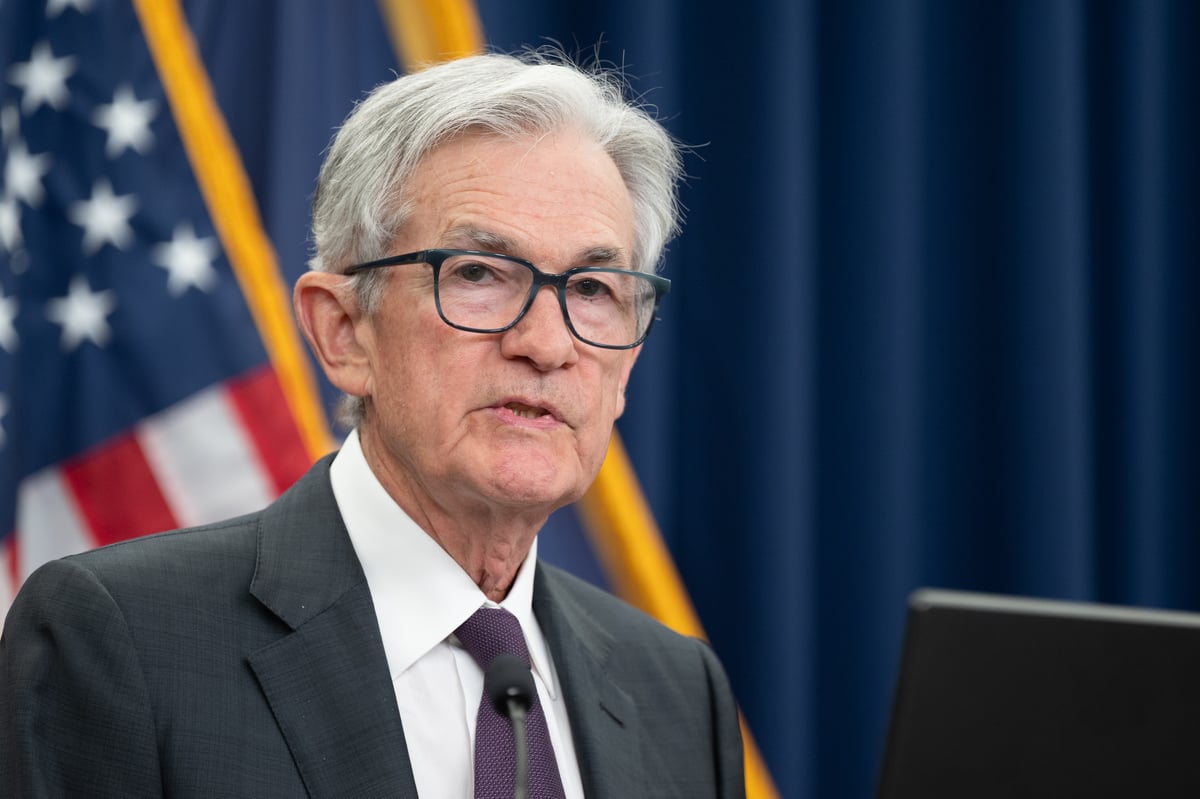
For Better or Warsh: The Federal Reserve May Be Wall Street's Ticking Time Bomb in 2026Image Credit: Yahoo Finance
Key Points
- •Washington D.C. — President Donald Trump’s nomination of former Federal Reserve Governor Kevin Warsh to lead the central bank introduces significant uncertainty for a stock market already navigating historic valuations and unprecedented internal division at the nation's foremost financial institution. The move, announced January 30, sets the stage for a potential paradigm shift in U.S. monetary policy should Warsh be confirmed to succeed current Chair Jerome Powell, whose term expires on May 15.
- •The Core Policy: Warsh has advocated for the Fed to systematically sell off its holdings. The central bank's balance sheet currently stands at $6.6 trillion, composed mainly of U.S. Treasury bonds and mortgage-backed securities (MBS) acquired during years of economic stimulus.
- •The Market Mechanism: To shrink the balance sheet, the Fed would sell these bonds into the open market. A fundamental principle of bond markets is that when supply increases, prices fall. As bond prices and yields move in opposite directions, a flood of new supply would push bond yields higher, particularly at the long end of the yield curve.
- •The Economic Impact: Higher long-term Treasury yields serve as a benchmark for a vast array of borrowing costs across the economy. This would translate directly to higher interest rates for 30-year mortgages, corporate bonds, and other consumer loans. While this could help suppress inflation, it would simultaneously increase costs for homebuyers and businesses, potentially slowing economic activity.
- •A Pattern of Dissent: Each of the last five FOMC policy meetings has concluded with at least one member formally dissenting from the majority decision—a rare and sustained break from consensus.
For Better or Warsh: The Federal Reserve May Be Wall Street's Ticking Time Bomb in 2026
Washington D.C. — President Donald Trump’s nomination of former Federal Reserve Governor Kevin Warsh to lead the central bank introduces significant uncertainty for a stock market already navigating historic valuations and unprecedented internal division at the nation's foremost financial institution. The move, announced January 30, sets the stage for a potential paradigm shift in U.S. monetary policy should Warsh be confirmed to succeed current Chair Jerome Powell, whose term expires on May 15.
The nomination arrives as Wall Street enjoys a prolonged period of strength. The S&P 500 has posted gains of 16% or more in six of the last seven years, with the Dow Jones Industrial Average and Nasdaq Composite regularly reaching new all-time highs. This rally has been fueled by catalysts from the rise of artificial intelligence to expectations of lower interest rates.
However, the potential appointment of Warsh directs market focus toward the Federal Reserve itself as a primary source of risk, threatening to disrupt the very policy environment that has supported asset prices for years.
A Nominee with a Hawkish Reputation
Kevin Warsh is no stranger to the Federal Reserve, having served on its Board of Governors from February 2006 to March 2011, a period that encompassed the Global Financial Crisis. During his tenure, he earned a reputation as a "hawk"—an official who prioritizes combating inflation, often by advocating for tighter monetary policy such as higher interest rates.
Past critiques of Warsh's record have centered on his focus on inflation during a time of severe labor market distress. While every nominee faces scrutiny, Warsh's well-established views signal a clear departure from the more accommodative stance of his predecessors.
The confirmation process will now move to the Senate, where Warsh requires approval from the Banking Committee before a vote by the full chamber.
The $6.6 Trillion Question: The Fed's Balance Sheet
The primary concern for investors is not Warsh's stance on interest rates alone, but his long-held conviction that the Federal Reserve should significantly shrink its massive balance sheet and retreat from its role as an active market participant.
This policy, known as quantitative tightening or deleveraging, would have direct and widespread economic consequences.
-
The Core Policy: Warsh has advocated for the Fed to systematically sell off its holdings. The central bank's balance sheet currently stands at $6.6 trillion, composed mainly of U.S. Treasury bonds and mortgage-backed securities (MBS) acquired during years of economic stimulus.
-
The Market Mechanism: To shrink the balance sheet, the Fed would sell these bonds into the open market. A fundamental principle of bond markets is that when supply increases, prices fall. As bond prices and yields move in opposite directions, a flood of new supply would push bond yields higher, particularly at the long end of the yield curve.
-
The Economic Impact: Higher long-term Treasury yields serve as a benchmark for a vast array of borrowing costs across the economy. This would translate directly to higher interest rates for 30-year mortgages, corporate bonds, and other consumer loans. While this could help suppress inflation, it would simultaneously increase costs for homebuyers and businesses, potentially slowing economic activity.
Inheriting a Divided House
Warsh would not be taking the helm of a unified institution. The Federal Open Market Committee (FOMC), the 12-member panel that sets monetary policy, is currently experiencing a period of historic internal disagreement. This fractures the image of a cohesive, predictable Fed that markets have long relied on.
The evidence of this division is stark and without recent precedent.
-
A Pattern of Dissent: Each of the last five FOMC policy meetings has concluded with at least one member formally dissenting from the majority decision—a rare and sustained break from consensus.
-
Unprecedented Opposite Dissents: More remarkably, the meetings in October and December 2025 featured dissents in opposite directions. While the FOMC consensus was to cut the federal funds rate by 25 basis points, some members voted for no cut at all, while at least one other voted for a more aggressive 50-basis-point cut. In the last 36 years, this has only occurred three times, with two of those instances happening in the last few months.
-
Erosion of Confidence: For investors, a lack of cohesion can be more unsettling than a policy error. Predictability and unified messaging from the central bank provide a crucial anchor for market expectations. A new chairman with strong, potentially divisive views is unlikely to bridge this gap and could exacerbate internal policy battles.
Implications for a High-Flying Market
This confluence of factors—a hawkish nominee, a major policy pivot, and an internally fractured Fed—comes at a particularly precarious time for the stock market.
The S&P 500's Shiller price-to-earnings (P/E) ratio, a long-term valuation metric, began 2026 at its second-highest level in over 150 years. Such elevated valuations suggest that markets are priced for near-perfect execution and continued favorable economic conditions, leaving little room for error or abrupt policy shocks.
The nomination of Kevin Warsh signals that the era of predictable, highly accommodative monetary policy may be drawing to a close. Investors and corporations will now be watching the Senate confirmation hearings closely, as the outcome will determine the leadership and direction of the world's most powerful central bank at a critical juncture for the U.S. economy and global markets. The key question is whether a Fed under new leadership can navigate these challenges without becoming the very source of instability it is designed to prevent.
Source: Yahoo Finance
Related Articles
Nationwide Protests Against ICE Enforcement Erupt in U.S.
Thousands are protesting ICE after the DOJ declined to investigate a fatal agent-involved shooting in Minneapolis, fueling a national movement and public anger.
Venezuela Amnesty Bill Could Free Political Prisoners
Learn about Venezuela's proposed amnesty bill to release political prisoners. The move could signal a major political shift and affect future economic sanctions
Pokémon Cancels Yasukuni Shrine Event After Backlash
The Pokémon Company has canceled an event at Tokyo's controversial Yasukuni Shrine after facing international backlash from China and South Korea.
US to Lose Measles Elimination Status: What It Means
The U.S. is poised to lose its measles elimination status due to escalating outbreaks. Learn what this downgrade means for public health and the economy.