Welsh Signs in Cornish Tesco Spark Localisation Debate
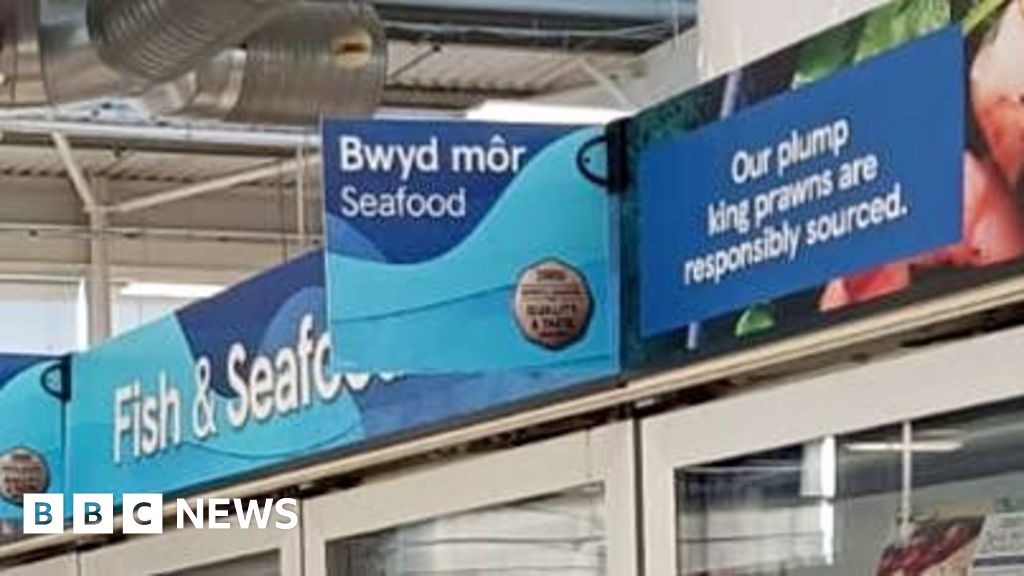
Welsh language signs spotted in Helston Tesco in CornwallImage Credit: BBC News
Key Points
- •LONDON – An apparently minor logistical error at a Tesco supermarket in Helston, Cornwall, has inadvertently cast a sharp spotlight on the complex, multi-million-pound strategies of corporate hyper-localisation. The appearance of Welsh-language signs in the Cornish store has sparked public debate, not merely over a simple mistake, but over the nuanced and often costly business of engaging with the UK's distinct national identities.
- •Building Brand Loyalty: By acknowledging and using a local language, corporations aim to position themselves as part of the community, not just a faceless national chain. This can translate into a significant competitive advantage.
- •Driving Sales: The strategy is predicated on the idea that consumers are more likely to spend with a brand that reflects their identity. This is particularly effective for marketing local produce and engaging in community-level promotions.
- •Complex Logistics: Executing this strategy requires a sophisticated and segmented supply chain. Unique product SKUs, marketing materials, and in-store signage must be created, managed, and delivered to the correct regions, adding layers of cost and complexity. The Helston error demonstrates a clear, albeit isolated, failure in this system.
- •The Welsh Market: The 2021 census recorded 538,000 people in Wales aged three and over (17.8% of the population) able to speak Welsh. This represents a substantial, legally protected linguistic market that makes the investment in bilingual signage commercially and legally viable.
Welsh language signs spotted in Helston Tesco in Cornwall
Incident Highlights Corporate Challenges in Regional Marketing and the Economics of Minority Languages
LONDON – An apparently minor logistical error at a Tesco supermarket in Helston, Cornwall, has inadvertently cast a sharp spotlight on the complex, multi-million-pound strategies of corporate hyper-localisation. The appearance of Welsh-language signs in the Cornish store has sparked public debate, not merely over a simple mistake, but over the nuanced and often costly business of engaging with the UK's distinct national identities.
The incident, which saw signs for products like "di-alcohol" (alcohol-free) and "cig oen" (lamb) displayed to the bemusement of Cornish shoppers, represents more than a simple supply-chain mix-up. For a retailer of Tesco's scale, it serves as a public case study in the operational risks inherent in tailoring its vast commercial footprint to specific regional and linguistic markets.
The Billion-Pound Bet on Localisation
Global retailers like Tesco invest heavily in strategies designed to resonate with local communities. This goes beyond stocking regional ales or cheeses; it extends to language and cultural identity, a tactic designed to foster brand loyalty and drive revenue in an intensely competitive market.
Tesco's long-standing practice of using bilingual Welsh-English signage across its stores in Wales is a prime example. It is a deliberate, strategic investment mandated by both Welsh law and commercial sensibility.
- Building Brand Loyalty: By acknowledging and using a local language, corporations aim to position themselves as part of the community, not just a faceless national chain. This can translate into a significant competitive advantage.
- Driving Sales: The strategy is predicated on the idea that consumers are more likely to spend with a brand that reflects their identity. This is particularly effective for marketing local produce and engaging in community-level promotions.
- Complex Logistics: Executing this strategy requires a sophisticated and segmented supply chain. Unique product SKUs, marketing materials, and in-store signage must be created, managed, and delivered to the correct regions, adding layers of cost and complexity. The Helston error demonstrates a clear, albeit isolated, failure in this system.
A Tale of Two Celtic Nations: The Cornish Context
The irony of Welsh signs appearing in Cornwall is sharpened by the official status of the Cornish people. This is the critical context that elevates the story from a local curiosity to a matter of national significance.
In 2014, the UK government officially recognised the Cornish as a national minority under the Council of Europe's Framework Convention for the Protection of National Minorities. This grants the Cornish the same status as the UK's other Celtic peoples: the Welsh, the Scots, and the Irish.
This official recognition creates a powerful public expectation. If one national minority receives corporate acknowledgment through language, why not another? The data, however, reveals the stark economic calculation that corporations must make.
- The Welsh Market: The 2021 census recorded 538,000 people in Wales aged three and over (17.8% of the population) able to speak Welsh. This represents a substantial, legally protected linguistic market that makes the investment in bilingual signage commercially and legally viable.
- The Cornish Revival: The Cornish language, Kernewek, has undergone a significant revival but from a much lower base. While exact figures are debated, estimates place the number of fluent or semi-fluent speakers in the low thousands. This presents a fundamentally different business case for a mass-market retailer.
The Helston incident, therefore, does not suggest a lack of respect from Tesco, but rather illustrates a corporate strategy in motion. The infrastructure for Welsh-language materials is mature and extensive; the equivalent for Cornish is non-existent at this scale because the perceived market demand has not yet crossed a critical threshold for investment.
The Bottom Line: Costs Beyond the Signage
For Tesco's finance and operations departments, the immediate impact is negligible—the cost of reprinting and replacing a few signs. The true costs, however, are less tangible but strategically more significant.
- Reputational Risk: The incident, though minor, risks alienating the very community the company may one day wish to court more directly. It can be perceived as ignorance of local identity, undermining the core purpose of a localisation strategy.
- Operational Scrutiny: The error forces a review of regional logistics. How did a pallet of signage designated for the Welsh distribution network end up in Cornwall? For a company obsessed with efficiency, such a breakdown, no matter how small, warrants investigation to prevent larger, more costly errors.
- Highlighting a Strategic Gap: The public reaction has effectively provided free market research. It has demonstrated a passionate desire within Cornwall for greater cultural recognition from major corporations, a demand that was previously less visible.
The Way Forward: A Question of Recognition
Tesco is expected to issue an apology and swiftly rectify the error, framing it as an honest mistake. The event will likely be closed internally as a minor logistical failing.
The larger question, however, now hangs in the air for Tesco and its competitors: what is the trigger point for investing in Cornish-language branding?
This incident may inadvertently accelerate that conversation. While the current number of Cornish speakers may not justify a full-scale rollout, a competitor could see an opportunity for a "first-mover" advantage. A small, symbolic gesture—such as bilingual "Welcome" (Wolkom) or "Thank You" (Meur ras) signs—could generate immense goodwill at a minimal cost.
Ultimately, the stray Welsh signs in a Cornish Tesco serve as a potent reminder for all multinational corporations operating in the UK. The pursuit of mass-market efficiency is in a constant, delicate balance with the growing demand for granular, authentic, and respectful local recognition. Getting it right is a source of profit and loyalty; getting it wrong, as seen in Helston, provides a free and very public lesson in corporate strategy.
Source: BBC News
Related Articles
Nationwide Protests Against ICE Enforcement Erupt in U.S.
Thousands are protesting ICE after the DOJ declined to investigate a fatal agent-involved shooting in Minneapolis, fueling a national movement and public anger.
Venezuela Amnesty Bill Could Free Political Prisoners
Learn about Venezuela's proposed amnesty bill to release political prisoners. The move could signal a major political shift and affect future economic sanctions
Pokémon Cancels Yasukuni Shrine Event After Backlash
The Pokémon Company has canceled an event at Tokyo's controversial Yasukuni Shrine after facing international backlash from China and South Korea.
US to Lose Measles Elimination Status: What It Means
The U.S. is poised to lose its measles elimination status due to escalating outbreaks. Learn what this downgrade means for public health and the economy.