What a fake poll reveals about worries around prediction mar
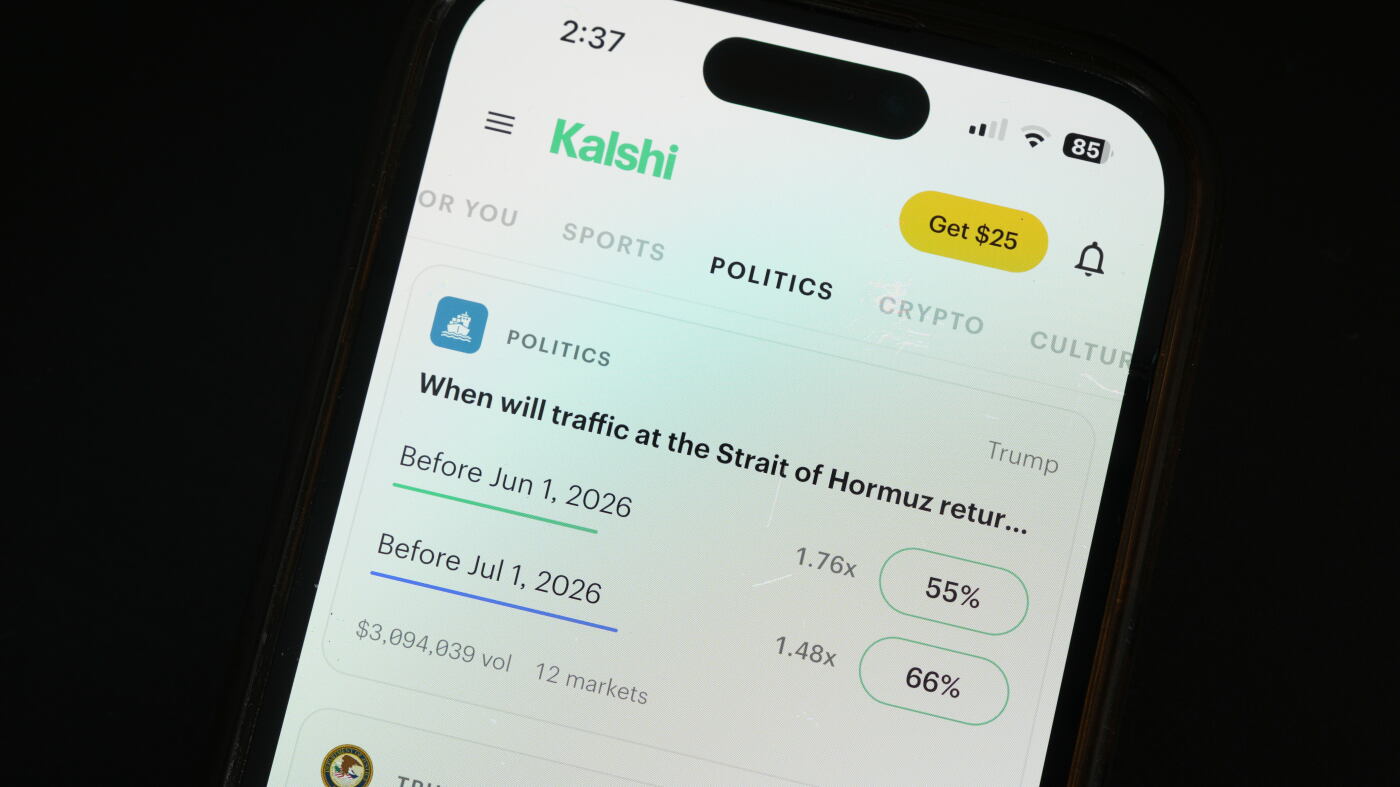
What a fake poll reveals about worries around prediction markets and the midtermsImage Credit: NPR Politics
Key Points
- •Why it matters: This will be the first major U.S. election cycle where Kalshi and Polymarket are operating as mainstream, high-volume platforms. Their newfound prominence makes them an attractive, and largely untested, arena for influence operations.
- •The threat: Concerns are mounting that bad actors could use ginned-up polls, coordinated social media campaigns, or other forms of disinformation to artificially move market prices for profit or political disruption.
- •The expert take: "These markets are very easily manipulated, and the platforms say they invest in surveillance and catch people after the fact, but when it comes to elections, the consequences are really grave," said Amanda Fischer, chief policy officer at the financial reform group Better Markets. Fischer fears that "partisan interests, and worse, perhaps even foreign actors" may seek to exploit these vulnerabilities.
- •Insider Trading: A special forces soldier was caught betting on the success of an operation to capture Venezuelan president Nicolás Maduro.
- •Political Profiteering: Former Congressman George Santos reportedly placed bets against his own attendance at the State of the Union address.
What a fake poll reveals about worries around prediction markets and the midterms
A brazen "social experiment" involving fabricated election polls has ignited fresh anxiety around the burgeoning world of prediction markets, highlighting their potential vulnerability to manipulation just as the country heads into a high-stakes midterm election season. While the 21-year-old creator of the fake data denies any attempt to profit, the incident served as a stark reminder of how easily misinformation can permeate the political landscape, raising alarms among regulators and financial watchdogs.
The immediate suspicion that the stunt was a ploy to rig betting markets underscores a growing unease with the multi-billion dollar platforms that have transformed political and current events into tradable assets.
The Anatomy of a Hoax
Earlier this month, a previously unknown firm called Median Strategies released polls for key races, including the Los Angeles mayoral election and contests in Wisconsin and Nevada. The data, which was reported by some media outlets and even promoted by a political campaign, was later revealed to be entirely fabricated.
Rahil Prakash, the 21-year-old identified by The Guardian as the man behind the fake polling outfit, claimed the bogus polls were a "short-term social experiment" designed to track how quickly fabricated figures could circulate through news and social media. In a statement to NPR, Prakash was adamant that the exercise was not for financial gain.
"No bets or trades were placed on prediction or betting markets related to any of the races for which Median Strategies published polling," Prakash stated.
A Cloud of Suspicion
Despite the denial, the assumption of market manipulation was swift and widespread. This reaction is rooted in the explosive growth and recent controversies surrounding prediction markets like Kalshi and Polymarket, where traders wager billions of dollars on outcomes ranging from economic indicators to election results.
With the midterms looming, experts warn these platforms are prime targets.
-
Why it matters: This will be the first major U.S. election cycle where Kalshi and Polymarket are operating as mainstream, high-volume platforms. Their newfound prominence makes them an attractive, and largely untested, arena for influence operations.
-
The threat: Concerns are mounting that bad actors could use ginned-up polls, coordinated social media campaigns, or other forms of disinformation to artificially move market prices for profit or political disruption.
-
The expert take: "These markets are very easily manipulated, and the platforms say they invest in surveillance and catch people after the fact, but when it comes to elections, the consequences are really grave," said Amanda Fischer, chief policy officer at the financial reform group Better Markets. Fischer fears that "partisan interests, and worse, perhaps even foreign actors" may seek to exploit these vulnerabilities.
The Investigation: No Smoking Gun
Internal probes by the major prediction markets have so far failed to connect Prakash’s hoax to any trading activity.
Kalshi, a U.S.-regulated market, confirmed that while Prakash does have an account, a review of his activity showed he placed no money on the races featured in his fabricated polls, according to two sources with direct knowledge of the matter.
Similarly, a source close to Polymarket said Prakash does not appear to have an account on its U.S. application, which requires identity verification. The company is still examining its more popular overseas platform, which allows users to trade anonymously using cryptocurrency.
Real-World Consequences
Even without a direct link to market rigging, the fake polls caused significant disruption.
The phony Los Angeles poll, which gave Mayor Karen Bass a favorable lead, was amplified by her campaign on social media before The Los Angeles Times exposed the data as a mischievous caper. The incident prompted the Bass campaign to call for the criminal prosecution of "bad faith attempts to influence elections."
The regulatory bodies that would oversee such a prosecution have remained silent. The Commodity Futures Trading Commission (CFTC), which regulates U.S. prediction markets, and the Department of Justice did not respond to requests for comment. The California Attorney General’s Office declined to comment.
A Pattern of Misconduct
The fears surrounding the fake poll are not abstract. Prediction markets have already been rocked by a series of high-profile manipulation and insider trading scandals that demonstrate their susceptibility to being gamed.
-
Insider Trading: A special forces soldier was caught betting on the success of an operation to capture Venezuelan president Nicolás Maduro.
-
Political Profiteering: Former Congressman George Santos reportedly placed bets against his own attendance at the State of the Union address.
-
Information Arbitrage: An operator of President Trump's teleprompter was found to have profited by trading on the content of the president's prepared remarks before they were delivered publicly.
These incidents have proven that individuals with privileged information or a willingness to exploit the system can and do turn to these markets for profit.
The Question of Predictive Power
Beyond the risk of outright fraud, some political professionals question the fundamental value of these markets as forecasting tools. A common critique is that they often simply reflect, rather than lead, the consensus established by traditional polling.
For example, during Wisconsin's gubernatorial primary, polls consistently showed Democrat David Crowley trailing the front-runners by a significant margin. The odds on Kalshi mirrored this, lagging behind the polling data and offering little new insight into the race's dynamics. This suggests that instead of harnessing the "wisdom of the crowds" to generate novel predictions, the markets may often be a lagging indicator, making them more of a sentiment gauge than a crystal ball.
The Road Ahead
The Median Strategies affair serves as a critical stress test for the prediction market ecosystem. As billions of dollars flow into these platforms, the incentive to manipulate them—for profit, political gain, or simply to sow chaos—grows in tandem.
With the midterm elections just months away, the incident has put operators like Kalshi and Polymarket under intense scrutiny. Their ability to police their platforms, prevent manipulation, and ensure market integrity will be paramount. For regulators, the episode is a clear signal that the intersection of finance, politics, and information warfare requires a vigilant and proactive approach. The coming election will be the ultimate test of whether these markets are a revolutionary tool for forecasting or another vulnerable flank in the battle against misinformation.
Source: NPR Politics
Related Articles
Nationwide Protests Against ICE Enforcement Erupt in U.S.
Thousands are protesting ICE after the DOJ declined to investigate a fatal agent-involved shooting in Minneapolis, fueling a national movement and public anger.
Venezuela Amnesty Bill Could Free Political Prisoners
Learn about Venezuela's proposed amnesty bill to release political prisoners. The move could signal a major political shift and affect future economic sanctions
Pokémon Cancels Yasukuni Shrine Event After Backlash
The Pokémon Company has canceled an event at Tokyo's controversial Yasukuni Shrine after facing international backlash from China and South Korea.
US to Lose Measles Elimination Status: What It Means
The U.S. is poised to lose its measles elimination status due to escalating outbreaks. Learn what this downgrade means for public health and the economy.