Why the Strait of Hormuz Is a Threat to the Global Economy
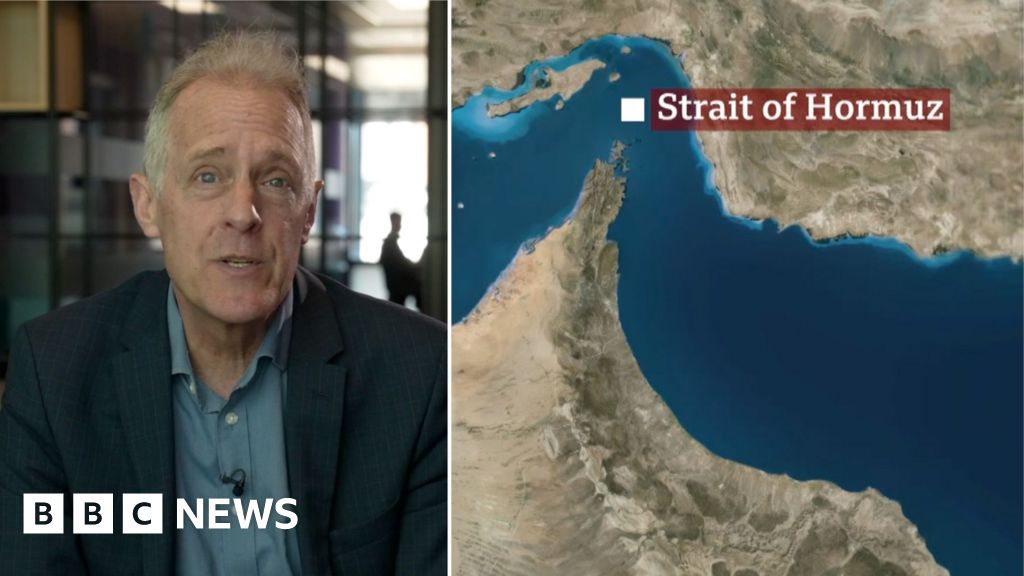
Watch: Why is it so hard to pass through the Strait of Hormuz?Image Credit: BBC News
Key Points
- •Global Oil Flow: Approximately 21 million barrels of oil per day—equivalent to the combined daily consumption of the United States, China, and India—pass through the strait. This represents roughly 20-21% of global petroleum liquids consumption.
- •Key Exporters: The world's largest oil producers, including Saudi Arabia, the UAE, Kuwait, Iraq, and Iran itself, rely on this route to get their crude to international markets.
- •Major Importers: The economies of Asia are particularly vulnerable. China, Japan, India, and South Korea are the primary destinations for crude transiting Hormuz, making their economic stability directly dependent on its accessibility.
- •Liquefied Natural Gas (LNG): The strait is just as crucial for natural gas. Qatar, one of the world's largest LNG exporters, ships nearly all its volume through this single point, a critical supply for heating and power generation in Europe and Asia.
- •Geographic Vulnerability: At its narrowest point, the shipping lane is only two miles wide in each direction, flanked by a buffer zone. This confined space limits a vessel's ability to maneuver and makes it highly susceptible to interference.
Here is the complete news article in markdown format.
The Choke Point: How Iran's Grip on the Strait of Hormuz Threatens the Global Economy
A critical artery of the global economy is in peril. The Strait of Hormuz, a narrow channel separating Iran from the Arabian Peninsula, is the transit point for one-fifth of the world's daily oil consumption. Now, with Iran effectively controlling which vessels may pass, this vital waterway has become a flashpoint, sending shockwaves through energy markets and corporate boardrooms worldwide.
The immediate consequences are stark. Shipping and insurance costs are skyrocketing, and the price of Brent crude, the international benchmark, has surged on fears of a prolonged supply disruption. The situation transforms a geographic bottleneck into a global economic crisis, underscoring the fragility of the world's energy supply chain.
Why Hormuz Matters
The strategic and economic importance of this 21-nautical-mile-wide strait cannot be overstated. It is the only sea passage from the Persian Gulf to the open ocean, making it an indispensable route for the region's energy titans.
-
Global Oil Flow: Approximately 21 million barrels of oil per day—equivalent to the combined daily consumption of the United States, China, and India—pass through the strait. This represents roughly 20-21% of global petroleum liquids consumption.
-
Key Exporters: The world's largest oil producers, including Saudi Arabia, the UAE, Kuwait, Iraq, and Iran itself, rely on this route to get their crude to international markets.
-
Major Importers: The economies of Asia are particularly vulnerable. China, Japan, India, and South Korea are the primary destinations for crude transiting Hormuz, making their economic stability directly dependent on its accessibility.
-
Liquefied Natural Gas (LNG): The strait is just as crucial for natural gas. Qatar, one of the world's largest LNG exporters, ships nearly all its volume through this single point, a critical supply for heating and power generation in Europe and Asia.
A Geopolitical Powder Keg
Navigating the Strait of Hormuz is a complex and perilous task even in times of peace. In the current climate of heightened tension, the risks are magnified. As diplomatic experts like the BBC's Paul Adams have frequently noted, the unique geography and military dynamics of the region create a volatile mix.
The waterway's narrowness forces massive supertankers into predictable shipping lanes, known as a Traffic Separation Scheme (TSS). These lanes pass directly through Iranian and Omani territorial waters, making them easy targets.
-
Geographic Vulnerability: At its narrowest point, the shipping lane is only two miles wide in each direction, flanked by a buffer zone. This confined space limits a vessel's ability to maneuver and makes it highly susceptible to interference.
-
Iran's Asymmetric Advantage: Iran's Islamic Revolutionary Guard Corps Navy (IRGC-N) is not designed to challenge a major navy like the U.S. in open-ocean combat. Instead, it specializes in asymmetric warfare perfectly suited for the strait's confines. Its arsenal includes:
- Swarms of small, fast attack craft.
- Sophisticated sea mines.
- Land-based anti-ship missiles.
- A growing fleet of surveillance and attack drones.
- The capability to board and seize vessels via helicopter and speedboat.
-
International Naval Presence: The U.S. Navy's 5th Fleet is headquartered in nearby Bahrain, tasked with ensuring freedom of navigation. However, its large aircraft carriers and destroyers are more vulnerable in the strait's shallow, constricted waters than on the high seas. The risk of miscalculation or an accidental clash between Iranian and international forces is dangerously high.
The Ripple Effect on Global Markets
The "effective closure" of the strait, where Iran dictates passage through seizures, heightened inspections, or outright blockades, has immediate and cascading economic consequences.
-
Surging Energy Prices: The first and most obvious impact is on the price of oil and LNG. Traders price in a "risk premium" to account for the potential loss of supply. A prolonged closure could easily drive crude prices well into triple digits, fueling global inflation.
-
Skyrocketing Insurance Costs: Insurers are charging massive "war risk premiums" for any vessel attempting to transit the strait. These costs, which can run into millions of dollars per voyage, are passed on from the shipping companies to the refiners, and ultimately, to consumers at the pump and on their utility bills.
-
Supply Chain Chaos: For countries heavily reliant on Hormuz, the disruption forces a frantic search for alternative supplies, which are often more expensive and difficult to secure. This strains global supply chains, impacts refinery operations, and can lead to fuel rationing in the most dependent nations.
Implications and Next Steps
The world now watches to see if the standoff will escalate or if a diplomatic off-ramp can be found. The path forward is fraught with risk, with few easy options available.
-
Diplomatic De-escalation: The primary focus for the international community is on finding a way to lower tensions. Mediators like Oman and Qatar, who maintain dialogue with both Iran and Western powers, are playing a crucial role in back-channel communications. The goal is to restore the status quo of unimpeded passage without rewarding aggressive actions.
-
Military Deterrence: The United States and its allies will likely increase their naval presence in the region, conducting "freedom of navigation" patrols to assert international law. While intended as a deterrent, this also increases the number of armed assets in a confined space, raising the potential for a direct military confrontation.
-
Long-Term Diversification: The crisis is a painful reminder of the world's over-reliance on a handful of energy choke points. This will accelerate long-term efforts to diversify energy sources and transit routes. This includes investing in pipelines that bypass the strait—such as Saudi Arabia's East-West pipeline to the Red Sea—and speeding up the transition to renewable energy. However, these are slow and expensive solutions that offer no relief from the current crisis.
For now, the global economy remains hostage to a geopolitical struggle playing out in a 21-mile stretch of water. Until a stable resolution is found, every tanker that enters the Persian Gulf is a gamble, and the world will continue to pay the price.
Source: BBC News
Related Articles
Nationwide Protests Against ICE Enforcement Erupt in U.S.
Thousands are protesting ICE after the DOJ declined to investigate a fatal agent-involved shooting in Minneapolis, fueling a national movement and public anger.
Venezuela Amnesty Bill Could Free Political Prisoners
Learn about Venezuela's proposed amnesty bill to release political prisoners. The move could signal a major political shift and affect future economic sanctions
Pokémon Cancels Yasukuni Shrine Event After Backlash
The Pokémon Company has canceled an event at Tokyo's controversial Yasukuni Shrine after facing international backlash from China and South Korea.
US to Lose Measles Elimination Status: What It Means
The U.S. is poised to lose its measles elimination status due to escalating outbreaks. Learn what this downgrade means for public health and the economy.