Xi to Trump: US Must Be Prudent on Taiwan Arms Sales
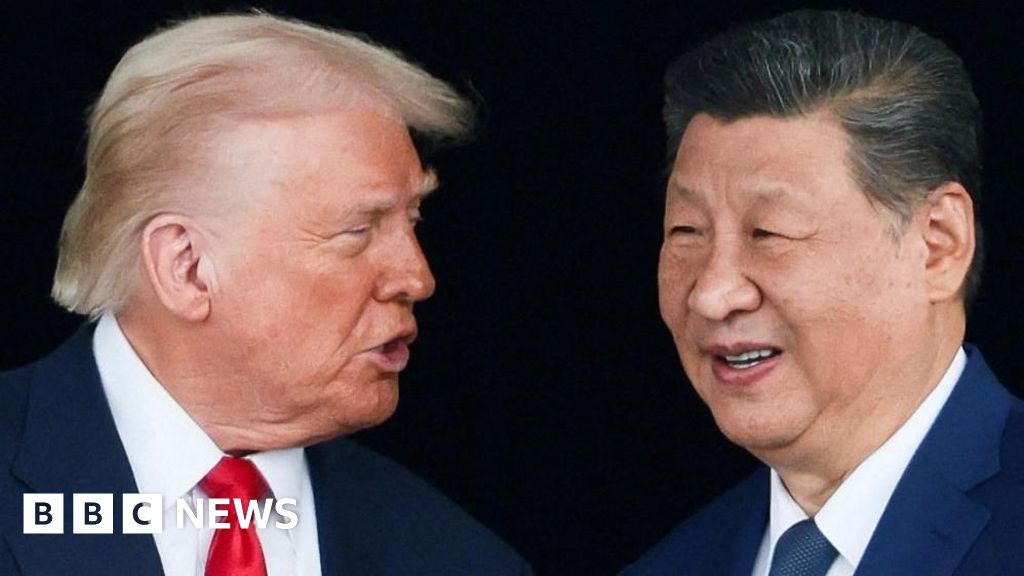
US must be prudent when supplying arms to Taiwan, Xi tells TrumpImage Credit: BBC News
Key Points
- •WASHINGTON – In a direct and pointed communication, Chinese President Xi Jinping has reportedly cautioned former US President Donald Trump to be "prudent" in supplying arms to Taiwan, a move that underscores Beijing's deep-seated sensitivity over the island's status and its strategic implications for global markets and security.
- •The Red Line: For Beijing, Taiwan is the most critical and non-negotiable issue. It views the self-governing island as a renegade province to be unified with the mainland, by force if necessary. U.S. arms sales are seen as an unacceptable encouragement of Taiwanese "separatist forces."
- •Economic Interdependence: Despite political friction, the U.S. and Chinese economies remain deeply intertwined. A military conflict in the Taiwan Strait would trigger a global economic crisis, shattering supply chains, disrupting trade routes, and sending shockwaves through financial markets far exceeding the impact of the war in Ukraine.
- •Election Implications: Xi's message is a clear signal to both U.S. political parties. He is assessing how a future Trump or Biden administration will handle the Taiwan issue, a policy that will have profound consequences for U.S. strategy in the Indo-Pacific.
- •The U.S. Position: Washington acknowledges Beijing's "One China" principle—the view that there is only one sovereign state under the name of China—but it does not endorse Beijing's claim over Taiwan. This is the cornerstone of a policy known as "strategic ambiguity."
US must be prudent when supplying arms to Taiwan, Xi tells Trump
WASHINGTON – In a direct and pointed communication, Chinese President Xi Jinping has reportedly cautioned former US President Donald Trump to be "prudent" in supplying arms to Taiwan, a move that underscores Beijing's deep-seated sensitivity over the island's status and its strategic implications for global markets and security.
The warning, delivered amid a fraught U.S. election season, places the delicate U.S.-China relationship squarely at the center of geopolitical and economic discourse. It highlights the tightrope any American administration must walk between supporting a democratic partner and managing a complex relationship with the world's second-largest economy.
A High-Stakes Diplomatic Exchange
The communication from President Xi represents a significant attempt by Beijing to directly influence the policy direction of a potential future U.S. administration.
Former President Trump, in a subsequent post on his Truth Social platform, characterized his rapport with the Chinese leader in positive terms, suggesting a belief in personal diplomacy to navigate such tensions.
"The relationship with China, and my personal relationship with President Xi, is an extremely good one, and we both realize how important it is to keep it that way," Trump wrote. This statement contrasts with the starkness of Xi's message, revealing the different public postures of the two leaders.
Why It Matters: Geopolitics Meets Global Economy
The exchange is more than a diplomatic spat; it touches the core of the global economic and security architecture. Taiwan is not only a geopolitical flashpoint but also the epicenter of the world's advanced semiconductor industry.
-
The Red Line: For Beijing, Taiwan is the most critical and non-negotiable issue. It views the self-governing island as a renegade province to be unified with the mainland, by force if necessary. U.S. arms sales are seen as an unacceptable encouragement of Taiwanese "separatist forces."
-
Economic Interdependence: Despite political friction, the U.S. and Chinese economies remain deeply intertwined. A military conflict in the Taiwan Strait would trigger a global economic crisis, shattering supply chains, disrupting trade routes, and sending shockwaves through financial markets far exceeding the impact of the war in Ukraine.
-
Election Implications: Xi's message is a clear signal to both U.S. political parties. He is assessing how a future Trump or Biden administration will handle the Taiwan issue, a policy that will have profound consequences for U.S. strategy in the Indo-Pacific.
Background: A Decades-Old Balancing Act
U.S. policy toward Taiwan has long been defined by a carefully calibrated ambiguity, designed to deter a Chinese invasion without explicitly committing U.S. forces to Taiwan's defense.
The "One China" Framework
The foundation of U.S.-China relations since the 1970s rests on a complex set of agreements and understandings.
-
The U.S. Position: Washington acknowledges Beijing's "One China" principle—the view that there is only one sovereign state under the name of China—but it does not endorse Beijing's claim over Taiwan. This is the cornerstone of a policy known as "strategic ambiguity."
-
The Taiwan Relations Act: Passed by Congress in 1979, this U.S. law requires Washington to provide Taiwan with the military articles and services necessary to enable it to maintain a sufficient self-defense capability. This act is the legal basis for the arms sales that are the subject of Xi's warning.
Trump's First Term: A Volatile Precedent
During his presidency, Trump's China policy was characterized by a mix of aggressive trade actions and personal diplomacy with Xi.
-
Trade War: He launched a tariff-based trade war aimed at correcting what he called unfair trade practices and intellectual property theft by China.
-
Personal Diplomacy: Simultaneously, Trump often praised his personal relationship with Xi, echoing the sentiment seen in his recent Truth Social post. His administration also approved significant arms sales to Taiwan, demonstrating the persistent tension between economic pressure and strategic obligations.
Market and Industry Implications
For global investors and corporations, the heightened rhetoric serves as a stark reminder of the geopolitical risks embedded in the global economy. The financial stakes are immense, particularly in the technology sector.
-
Semiconductor Chokepoint: Taiwan Semiconductor Manufacturing Company (TSMC) produces the vast majority of the world's most advanced microchips. A blockade or conflict involving Taiwan would halt production, creating a catastrophic shortage for global industries, from automotive and consumer electronics to data centers and defense.
-
Supply Chain De-risking: The uncertainty is accelerating a corporate trend of "de-risking" or "friend-shoring" supply chains. Companies are actively seeking to reduce their heavy reliance on China and the surrounding region for manufacturing and sourcing, a costly and complex multi-year process.
-
Market Sentiment: Increased tensions in the Taiwan Strait typically trigger a "risk-off" move in financial markets. Investors tend to sell equities and other risk assets in favor of safe-haven investments like the U.S. dollar, gold, and government bonds.
What's Next
The world will be watching for any shifts in rhetoric or policy from Washington and Beijing as the U.S. election approaches.
-
Monitoring U.S. Policy: International allies and adversaries will closely monitor campaign statements and policy papers from both the Biden and Trump campaigns for signals on their future approach to China and Taiwan.
-
Military Posturing: Expect continued military activity from both China's People's Liberation Army (PLA) and the U.S. military in the region. These operations serve as both training exercises and powerful signals of intent and capability.
-
Corporate Strategy: Businesses will continue to factor geopolitical risk into their long-term investment decisions. The diversification of supply chains away from the region is no longer a theoretical exercise but an active, board-level priority for multinational corporations. The prudence Xi advises for Washington is a principle global markets are already beginning to price in.
Source: BBC News
Related Articles
Nationwide Protests Against ICE Enforcement Erupt in U.S.
Thousands are protesting ICE after the DOJ declined to investigate a fatal agent-involved shooting in Minneapolis, fueling a national movement and public anger.
Venezuela Amnesty Bill Could Free Political Prisoners
Learn about Venezuela's proposed amnesty bill to release political prisoners. The move could signal a major political shift and affect future economic sanctions
Pokémon Cancels Yasukuni Shrine Event After Backlash
The Pokémon Company has canceled an event at Tokyo's controversial Yasukuni Shrine after facing international backlash from China and South Korea.
US to Lose Measles Elimination Status: What It Means
The U.S. is poised to lose its measles elimination status due to escalating outbreaks. Learn what this downgrade means for public health and the economy.